

Reporting insights · November 6, 2026
A Clearer Picture of Educator Support Across Minnesota
How participation, progress and coaching data could help MDE and regional partners focus educator support across Minnesota.
A 57-second look at how reporting can inform educator support and state-level planning.
For education leaders, a participation total is only part of the story. Which educators are receiving support? Where are they making progress? And where could a different kind of support help?
Those answers can be hard to see when participation, assessments and coaching activity sit in separate records. Leaders need a way to connect the details and see patterns across groups.
Proserva’s MDE / COMPASS report brings participation, rubric ratings and coaching priorities into view. District teams can explore their educators’ experiences in more detail. For MDE and regional partners, extending this visibility across participating programs could help guide professional learning and support at the state level.
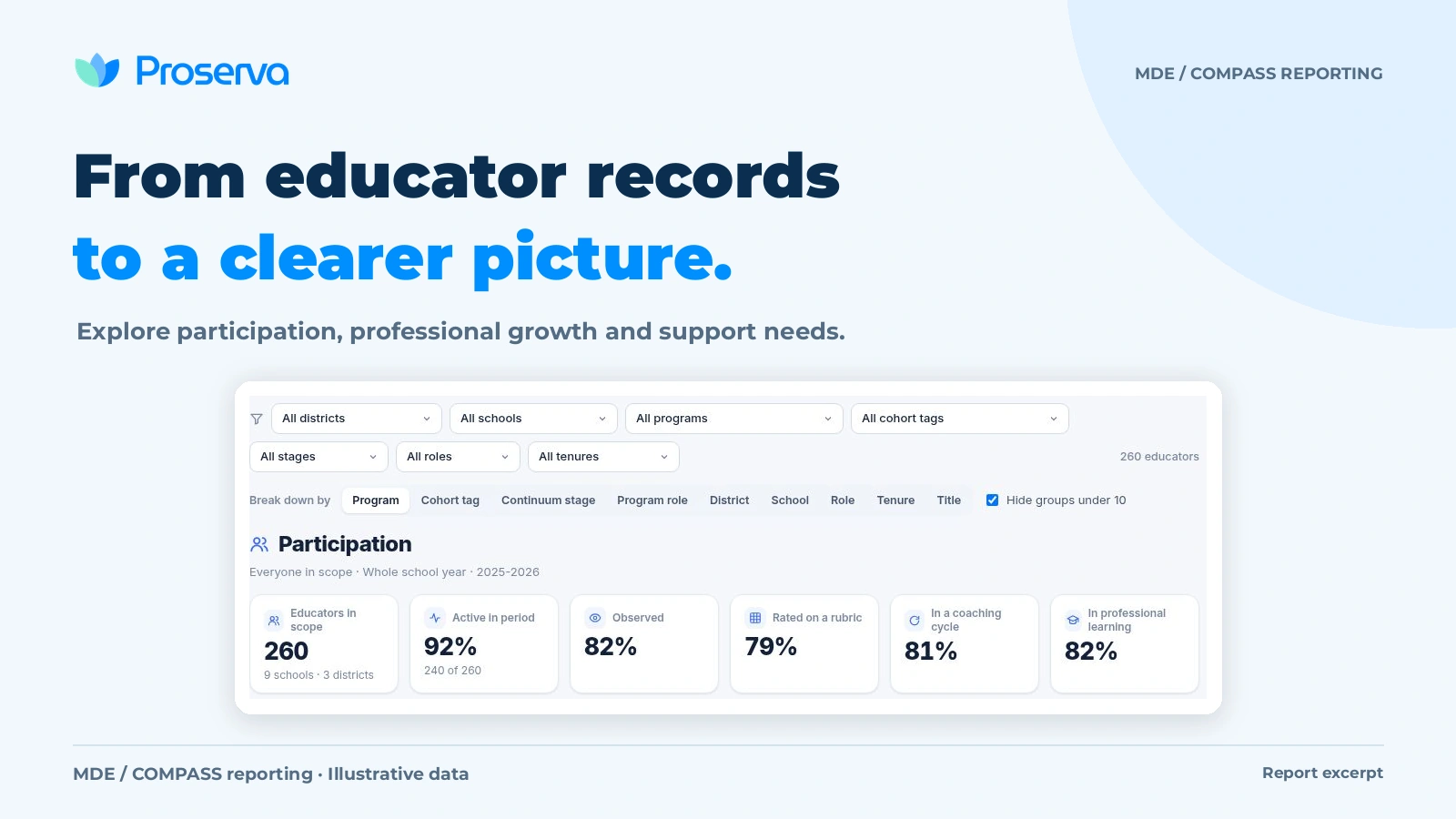
See who support is reaching
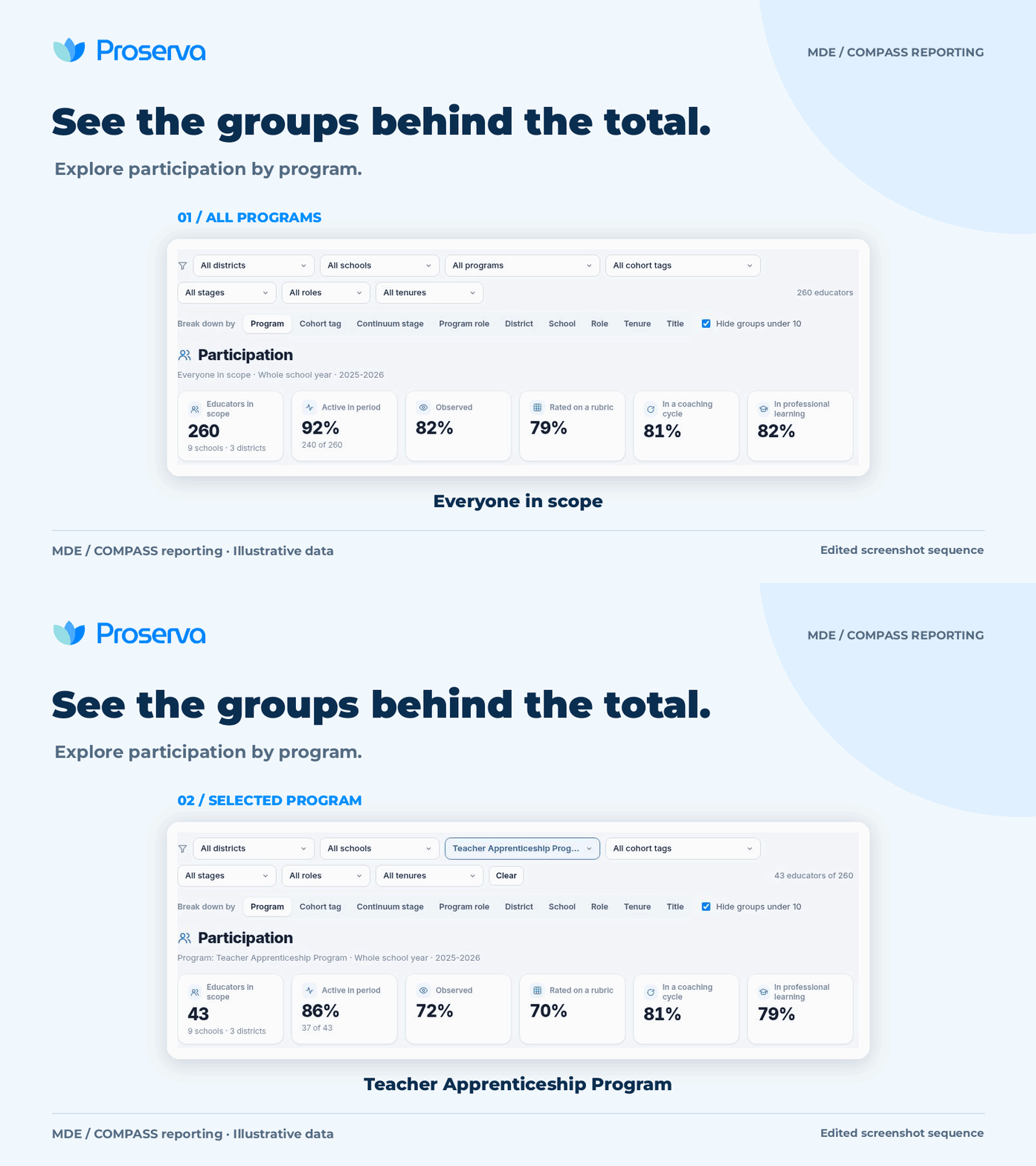
A program can have strong overall participation while some groups are less involved. Breaking the total down by program, cohort, district or school helps leaders see where to look more closely.
The report shows recorded participation in coaching cycles, observations and professional learning. Teams can use those views to ask:
- Which groups are taking part in support activities?
- Where is participation lower than expected?
- Does a gap reflect missing records, a different support model or a need for follow-up?
A missing record does not necessarily mean an educator went without support. It gives the team a specific question to investigate.
That visibility matters for MDE’s induction and mentoring work, which focuses on the conditions and ongoing support that help new teachers develop and stay in the profession.
Follow progress over time
A single assessment captures one moment. Comparing an educator’s first and latest ratings on the same rubric helps show how their recorded practice has changed.
The report brings those comparisons together by group and rubric indicator. Leaders can see where ratings are improving, where they are holding steady and which areas deserve a closer look.
For state and regional teams, these patterns could help focus discussions with program leaders: Where is progress visible? What are teams learning? Where might additional support be useful?
Fair comparisons need a consistent rubric and a clear understanding of who is included. Ratings alone cannot establish that a program caused an improvement, but they can help teams decide what to explore next.
Turn patterns into coaching priorities
Knowing where educators need support helps make professional learning more relevant. COMPASS, Minnesota’s statewide system of support for continuous improvement, connects professional learning with implementation through coaching, consultation and communities of practice.
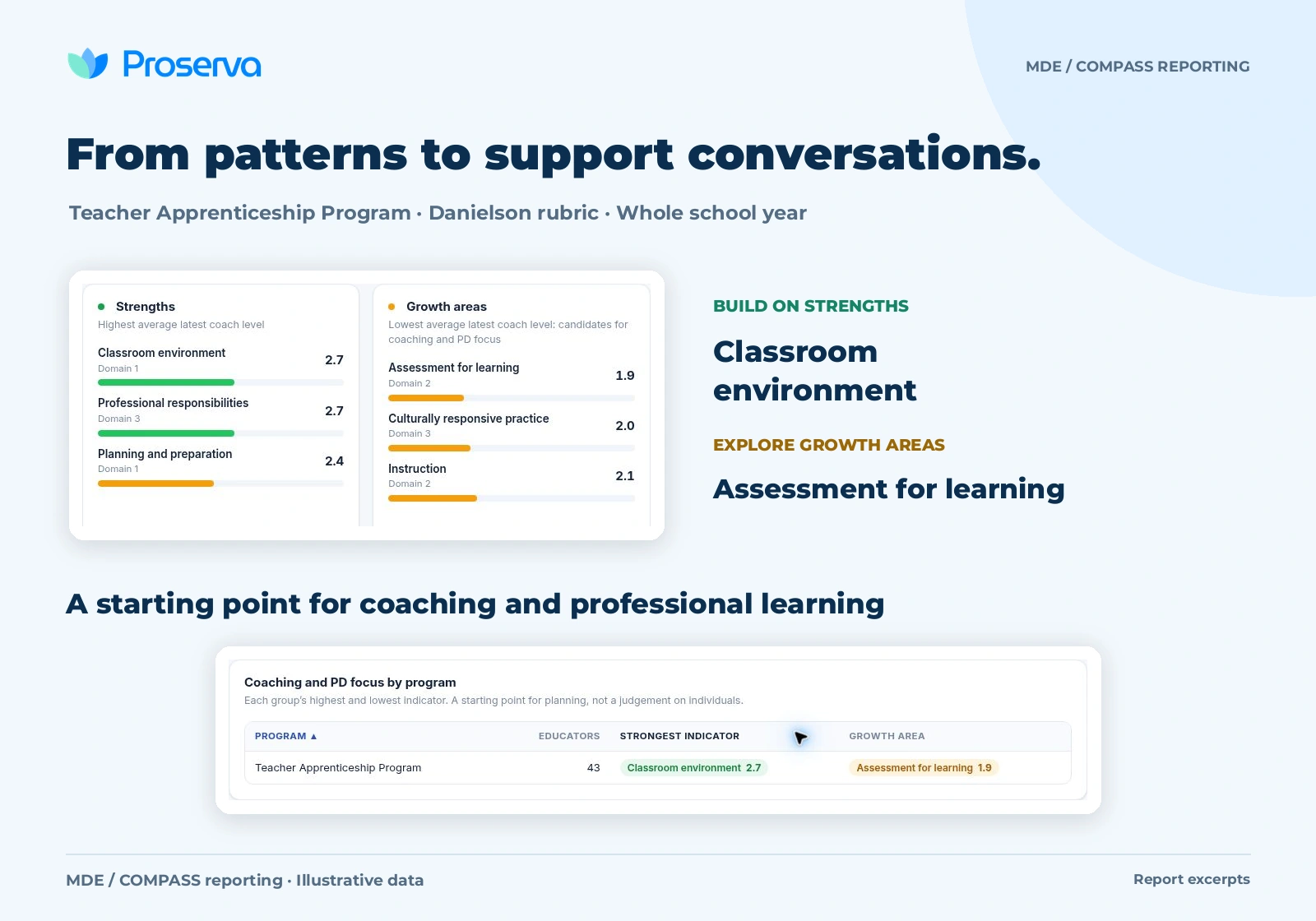
The report highlights a group’s strongest rubric indicators and areas for growth. It also shows differences between self and coach ratings, giving teams another way to explore their support needs.
For example, a group might have stronger ratings in classroom environment and lower ratings in assessment for learning. A program leader could use that pattern to discuss assessment-focused coaching, ask educators what would help and check other evidence before deciding on a response.
Across programs, similar patterns could help MDE and regional partners identify shared professional learning priorities. Educators and local teams would still bring the context needed to choose the right support.
Give state leaders a broader view
District teams need tools to understand the educators they support. State leaders need to see where those experiences point to a shared challenge across programs.
With a broader view, MDE and regional partners could identify common support needs, explore differences in participation and focus planning discussions on the areas that warrant attention.
The views shown here operate at the district level. Extending them across participating districts and programs requires agreed measures, reliable data and appropriate access permissions.
The goal is practical: help education leaders see who is receiving support, understand how educators are progressing and put that knowledge to work in planning coaching and professional learning.
